Your Body, Your Blueprint: Navigating Personalized Treatment When Standard Protocols Fall Short
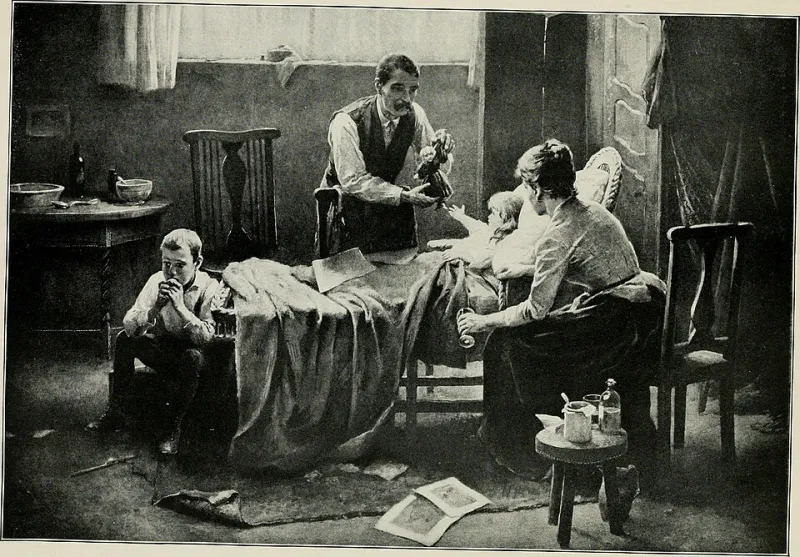
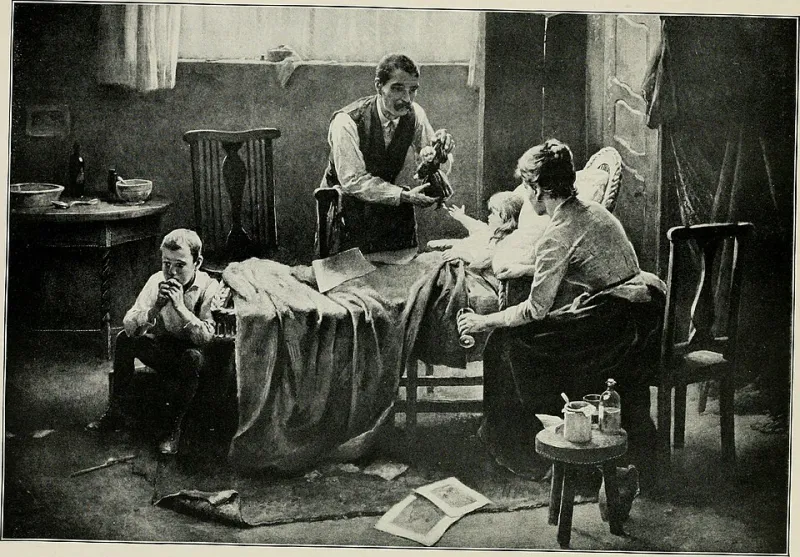
Photo: Internet Archive Book Images, No restrictions, via Wikimedia Commons
Medicine has never been more advanced. Clinical guidelines, evidence-based protocols, and standardized treatment pathways have saved countless lives and reduced preventable harm across the American healthcare system. Yet there is a quiet tension that plays out in exam rooms every day: the tension between what the textbook recommends and what actually works for the person sitting on the paper-covered table.
Standard care is, by design, built for the average patient. It reflects the best available evidence across large populations. But you are not a population. You are an individual with a particular medical history, a distinct set of values, a specific lifestyle, and health goals that may not map neatly onto any published guideline. Recognizing that gap—and knowing how to bridge it—is one of the most empowering things a patient can do.
What "Standard Care" Actually Means
When a physician recommends a course of treatment, that recommendation typically draws from clinical practice guidelines developed by professional medical organizations such as the American College of Physicians, the American Heart Association, or the U.S. Preventive Services Task Force. These guidelines synthesize large bodies of research and represent the most broadly effective approaches for a given condition.
However, guidelines are updated periodically, vary between organizations, and often acknowledge uncertainty or room for clinical judgment. The American Medical Association itself emphasizes that guidelines are not mandates—they are starting points. A recommendation that a medication be the first-line treatment for a condition does not mean it is the only legitimate treatment, nor that it is the right treatment for every person who has that condition.
Understanding this distinction is the foundation of informed, collaborative care.
Legitimate Reasons to Explore Alternatives
There are several well-recognized circumstances under which patients and providers may reasonably consider pathways beyond the standard protocol:
Contraindications and comorbidities. A first-line treatment for one condition may interact poorly with another condition you have or a medication you already take. In these cases, deviation from the standard approach is not only acceptable—it is medically necessary.
Tolerability and quality of life. A treatment that is statistically effective but causes side effects that significantly diminish your daily functioning may not represent the best option for you. Quality of life is a legitimate medical consideration, not a preference to be dismissed.
Philosophical or religious values. Some patients have deeply held beliefs about certain interventions—blood transfusions, specific medications derived from particular sources, or surgical procedures. Providers who respect patient autonomy will work within these boundaries wherever medically possible.
Lifestyle and adherence factors. The most effective treatment is one a patient can realistically follow. A regimen that requires twice-daily injections may be clinically superior on paper but inferior in practice for a patient whose work schedule or living situation makes consistent administration impossible.
Emerging or integrative approaches. In some areas of medicine, there is legitimate clinical interest in integrative therapies—approaches that combine conventional treatment with evidence-informed complementary practices. These conversations are increasingly welcomed in patient-centered practices.
How to Start the Conversation
Many patients hesitate to question a physician's recommendation, fearing they will appear difficult, non-compliant, or mistrustful. In reality, a well-prepared patient who asks thoughtful questions is an asset to their own care. The following framework can help structure these conversations productively.
Ask about the evidence base. A simple question—"What is this recommendation based on, and how strong is that evidence?"—opens the door to a more nuanced discussion. Your provider should be able to explain the reasoning, and the answer may reveal that the guideline is more flexible than it initially appeared.
Describe your specific concerns. Rather than simply refusing a recommended treatment, articulate why it presents a challenge for you. "I'm concerned about the fatigue side effect because I work night shifts" gives your provider something concrete to work with. Vague resistance is harder to address than specific, reasoned concern.
Request a comparison of options. Ask your provider to walk you through the available alternatives, including their respective benefits, risks, and evidence levels. Phrases like "Are there other approaches we should consider?" or "What would happen if we tried X before moving to Y?" invite collaborative problem-solving.
Involve a specialist when appropriate. If your primary care provider is uncertain about alternatives, a referral to a specialist who focuses on your specific condition may surface additional options. Seeking another perspective is not a sign of distrust—it is a sign of engagement.
The Role of Shared Decision-Making
The concept of shared decision-making has become a cornerstone of contemporary patient-centered care. It is a structured process in which provider and patient together review the available options, weigh the evidence, and arrive at a plan that reflects both clinical best practice and the patient's individual preferences and circumstances.
Research published in medical literature consistently shows that patients who participate actively in treatment decisions report higher satisfaction, better adherence, and in many cases, improved outcomes. Shared decision-making is not about patients overriding medical expertise—it is about combining that expertise with personal knowledge that only the patient holds.
At First Option Medical, this philosophy is central to how care is delivered. The goal is not to simply prescribe a pathway, but to help patients understand their options, ask the right questions, and arrive at decisions they feel confident in.
When Standard Care Is the Right Choice
It is equally important to acknowledge that in many clinical situations, the standard protocol is the standard protocol for excellent reason. Conditions such as bacterial infections requiring specific antibiotics, emergency cardiac events, or confirmed malignancies often have treatment pathways where deviation carries serious risk. Personalized care does not mean rejecting established medicine—it means applying it thoughtfully.
A trusted provider will be transparent about when flexibility exists and when it does not. If a physician recommends a particular course of treatment with urgency and limited alternatives, ask them to explain why the standard approach is especially important in your specific case. That conversation itself is a form of informed participation.
Your First Step
If you have ever left a medical appointment feeling that the recommended plan did not quite fit your life, you are not alone. The American healthcare system is steadily shifting toward more individualized, patient-centered models of care—and patients who advocate for themselves thoughtfully are driving that shift.
The next time a treatment recommendation gives you pause, consider it an invitation rather than a verdict. Come prepared with questions. Describe your concerns clearly. Ask about alternatives. And seek out a provider who treats your input not as an obstacle, but as an essential part of the clinical picture.
Your health is not a textbook case. It deserves a plan built for you.