Your Health History Belongs to You: How to Claim, Organize, and Use Your Medical Records
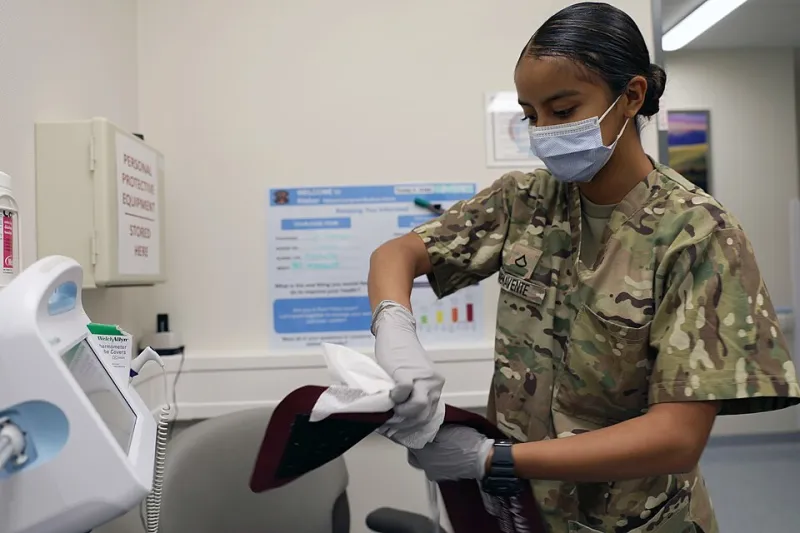
Photo: U.S. Army RHCE by Russell Toof, Public domain, via Wikimedia Commons
Imagine arriving at a specialist's office for a long-awaited consultation, only to discover that your referring physician's notes have not transferred. Or consider the possibility that a medication allergy recorded incorrectly years ago has quietly followed you from provider to provider, shaping treatment decisions without your knowledge. These are not hypothetical concerns—they are scenarios that play out in medical offices across the United States every day.
The solution, in many cases, is straightforward: obtain and maintain your own copies of your medical records. It is a step that relatively few patients take, yet one that carries significant consequences for the quality, safety, and continuity of care they receive.
What the Law Actually Says
Under the Health Insurance Portability and Accountability Act—commonly known as HIPAA—patients in the United States have a legally protected right to access their medical records. This right applies to virtually any healthcare provider who transmits health information electronically, which encompasses the overwhelming majority of hospitals, clinics, physician practices, and laboratories operating today.
Specifically, the HIPAA Privacy Rule entitles you to inspect and obtain copies of your health information held in what are called "designated record sets." These include your medical history, diagnoses, treatment plans, laboratory results, imaging reports, billing records, and any other documentation used to make decisions about your care.
Providers are generally required to fulfill records requests within 30 days. If additional time is needed, they may request a single 30-day extension, but they must notify you of the delay in writing. Importantly, while providers may charge a reasonable fee to cover the cost of copying and mailing records, they are prohibited from denying access simply because you have an outstanding balance.
In 2021, updated federal rules further strengthened patient access rights by requiring many providers and health plans to make certain health information available electronically at no charge through standardized application programming interfaces—a technical development that has accelerated the growth of patient-facing health portals.
Why Holding Your Own Records Changes Everything
The practical benefits of maintaining personal copies of your medical documentation extend well beyond convenience. Consider the following.
Catching Errors Before They Cause Harm
Medical records are created and updated by human beings working under significant time pressure. Transcription mistakes, outdated entries, and miscoded diagnoses are more common than most patients realize. A 2020 study published in JAMA Network Open found that patients who reviewed their clinical notes identified a meaningful number of errors—some of which had direct implications for their treatment. When you hold your own records, you become an additional layer of quality control.
Enabling Seamless Transitions Between Providers
Whether you are relocating, changing primary care physicians, or seeking evaluation from a subspecialist, having your records on hand eliminates delays and reduces the risk of information being lost in transit. You are not dependent on one office contacting another, a process that can take days or weeks and occasionally fails altogether.
Supporting Informed Decision-Making
When you can review your own lab trends, imaging findings, and clinical notes, you arrive at appointments better prepared to ask meaningful questions. You understand your baseline. You can identify patterns. You are a participant in your care rather than a passive recipient of it.
Preserving Continuity During Emergencies
In an urgent or emergency situation, the ability to immediately present an accurate medication list, allergy history, and relevant diagnoses can be lifesaving. A personal health summary derived from your records—stored on your phone or in a secure physical folder—provides critical context when you may be unable to communicate it yourself.
How to Request Your Records: A Step-by-Step Approach
The process of requesting medical records is more straightforward than many patients expect. The following steps apply broadly across most healthcare settings in the United States.
Step 1: Identify the Records You Need
Begin by thinking through which providers hold information relevant to your care. This may include your primary care physician, any specialists you have seen, hospitals where you have been treated, urgent care centers, laboratories, and imaging facilities. Each entity holds its own records and must be contacted separately.
Step 2: Locate the Records Request Process
Most practices have a designated process for records requests, often managed by a medical records department or a patient services team. Check the provider's website for a records request form, or call the office directly to ask how they prefer to receive requests. Many larger health systems now allow requests to be submitted through their patient portal.
Step 3: Submit a Written Request
While some providers accept verbal requests, submitting your request in writing creates a clear record and typically results in faster processing. Your written request should include your full name, date of birth, contact information, the specific records you are requesting (or the date range you wish to cover), and the format in which you prefer to receive them—electronic or paper.
Step 4: Specify Electronic Delivery When Possible
Electronic records are generally faster to receive, easier to store, and simpler to share with other providers. If a provider offers electronic delivery through a secure portal or encrypted email, opt for that format. Common file types include PDF documents and structured formats such as CCDA, which can be imported into personal health record applications.
Step 5: Review What You Receive
Once your records arrive, take time to read through them carefully. Pay particular attention to your problem list, medication list, allergy documentation, and any diagnoses or findings that you do not recognize or that appear inaccurate. If you identify an error, you have the right under HIPAA to request an amendment to your record.
Step 6: Organize and Store Securely
Establish a consistent system for storing your records—whether digital, physical, or both. Digital records should be kept in a password-protected folder or a reputable personal health record application. Physical documents should be stored in a secure location and organized chronologically or by provider. Update your collection after each significant medical encounter.
When a Provider Pushes Back
Although HIPAA is federal law, some patients encounter resistance when requesting their records. A provider may cite concerns about privacy, claim that records are unavailable, or quote fees that seem disproportionate. In most cases, a polite but firm restatement of your legal right under HIPAA is sufficient to resolve the issue.
If a provider fails to respond within the legally required timeframe or denies your request without lawful justification, you may file a complaint with the U.S. Department of Health and Human Services Office for Civil Rights. The process is free, and the Office for Civil Rights takes access violations seriously.
Taking Ownership of Your Health Narrative
At First Option Medical, we believe that informed patients are better patients—and that access to information is the foundation of meaningful healthcare engagement. Requesting your medical records is not a bureaucratic exercise. It is a declaration that you are an active participant in decisions that affect your body, your treatment, and your future.
Your health history does not belong exclusively to the institutions that documented it. It belongs to you. Claiming it is not merely your right—it is your first step toward a more empowered relationship with your own care.