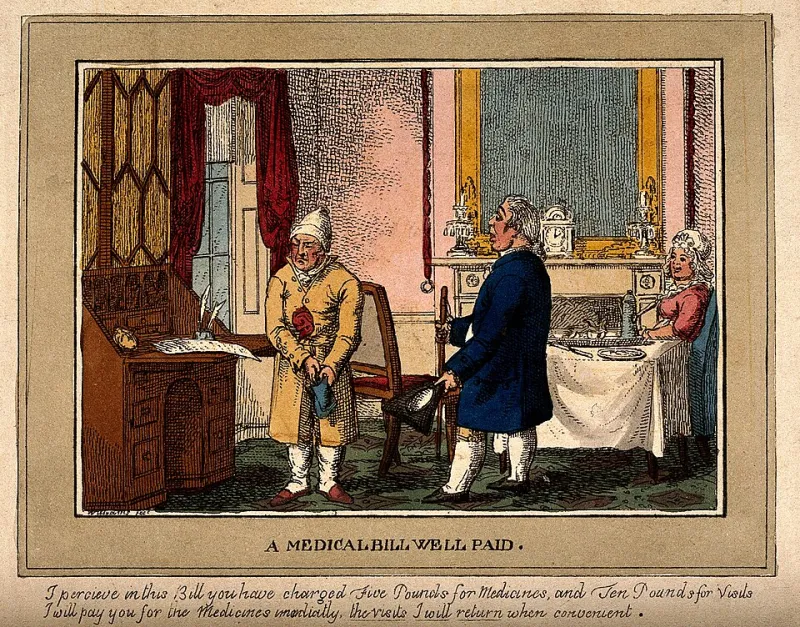
Before You Pay That Bill: How to Audit a Medical Statement Like a Pro

Photo: https://www.myupchar.com/en, CC BY-SA 4.0, via Wikimedia Commons
A bill arrives. The amount is large, the language is dense, and the due date is sooner than you would like. For millions of Americans, the path of least resistance is to pay it and move on. That instinct is understandable—but it is also expensive. Industry analyses have repeatedly found that a meaningful share of medical bills contain errors, from duplicated procedures to charges for services that were never rendered.
The good news: you do not need a background in health administration to catch many of these mistakes. You need a process.
Step One: Demand the Itemized Version
The summary bill from a hospital or practice is a marketing document, not an accounting document. It collapses dozens of services into broad categories like "pharmacy" or "lab." Before you pay anything, request an itemized statement. Under federal law and many state statutes, you are entitled to a detailed accounting of charges. A phone call or a message through the patient portal usually suffices.
When the itemized bill arrives, compare it against two things: your own memory of the visit, and the explanation of benefits (EOB) from your insurer. Any service listed that you do not recall receiving deserves a question. A charge for a "room and supplies" fee on a day you were never admitted deserves a stronger one.
Step Two: Learn to Read the Codes
Every service on your bill carries a code—typically a CPT (Current Procedural Terminology) code for procedures and an ICD-10 code for diagnoses. These five-character strings determine what gets billed and what gets covered.
Look for three common problems:
- Duplicates. The same CPT code appearing two or more times on a single day may be legitimate (bilateral procedures, for instance) or may be a clerical error. Ask which it is.
- Upcoding. A routine visit billed as a complex, high-level evaluation carries a higher price. If a quick follow-up was billed as an extended consultation, contest it.
- Mismatches. If your diagnosis code does not align with the procedure performed, insurers may deny the claim—and you may be billed for the balance.
A quick search of any unfamiliar code will tell you what it represents. You are not being paranoid by looking; you are being a responsible consumer of a very large purchase.
Step Three: Check It Against the Estimate
If your care was planned—a scheduled procedure, an imaging study, a delivery—you may have received a Good Faith Estimate, a document you can request in advance of care at facilities and from providers. Compare the final bill against that estimate. Significant unexplained variances are grounds for a formal billing dispute, and under the No Surprises Act, certain out-of-network charges you did not choose cannot simply be passed to you.
Step Four: Question the Balance Bill
One of the most frequent and least understood charges is the "balance bill": the gap between what your insurer paid and what the provider charged. Sometimes it is legitimate. Often, particularly when an in-network facility quietly routes your lab work or anesthesia to an out-of-network vendor, it is not. Ask whether the provider is in-network for your specific plan, and whether the charge falls under surprise-billing protections.
Step Five: Negotiate—It Works More Often Than You Think
Hospitals and large practices have financial assistance policies, prompt-pay discounts, and hardship programs that many patients never hear about. A polite, documented request can reduce a bill substantially. When you call:
- Have the itemized bill, EOB, and any relevant dates in front of you.
- Ask specifically about a discount for paying in full or a structured payment plan at zero interest.
- Request financial assistance applications if your income qualifies.
- Get every agreement in writing before you send money.
When to Escalate
If a practice will not correct a documented error, escalate to your state's attorney general consumer protection division, your state insurance department, or a nonprofit medical billing advocate. Keep copies of everything. Disputes are won on paper, not on patience.
Your Signature Is Not an Admission
Perhaps the most important mindset shift is this: a medical bill is an invoice, not a verdict. You would not pay an auto repair invoice listing work that was never done on your car. The same standard applies to your body. Read it, question it, and only then pay it.