One Cabinet, Once a Year: A January Reset for the Medicines You Forgot You Own
The medicine cabinet is the one part of the house where time quietly works against you. Prescriptions from a surgery three winters ago, a cough syrup bought during a flu that never fully arrived, a tube of antibiotic ointment with a crimped cap and a faded expiration date—these items do not announce that they have outlived their usefulness. They simply wait. And each January, without a deliberate reset, the collection grows.
An annual audit of your home health supplies is one of the simplest preventive health tasks available to any household. It costs nothing, takes under an hour, and addresses a genuine safety issue: according to the CDC, unintentional medication poisoning remains a leading cause of injury in American homes, particularly among young children and older adults. The cabinet you stopped looking at is the one most likely to cause harm.
Start With the Date, Not the Doubt
The first pass is the easiest. Pull everything out—every bottle, box, and blister pack—and check the printed expiration date. Discard anything past it, no exceptions and no negotiation with yourself.
The instinct to keep expired medication is understandable. It cost money. It might still "mostly work." But expired drugs lose potency unpredictably, and some—like certain liquid antibiotics and tetracyclines—can degrade into compounds that are actively undesirable. A medication that fails when you need it is not a savings; it is a hidden liability.
One distinction worth knowing: expiration dates apply to unopened, properly stored products. A bottle that was exposed to humidity, heat, or sunlight for months may be compromised even if the date has not passed. When in doubt, discard.
The Leftover Prescription Question
The hardest items to sort are the unfinished prescriptions, and none is trickier than antibiotics. Many patients keep a half-finished course "in case it comes back." Pharmacists consistently identify this as one of the most dangerous habits in home medicine storage.
Leftover antibiotics should never be reused, and the reasons are specific. First, the original prescription was calibrated to an infection that may not be the same as the next one. Second, taking a partial course fuels antibiotic resistance—one of the most pressing public health threats in the United States. Third, self-diagnosing a bacterial infection is unreliable; what feels like the same illness may be viral, in which case the drug does nothing except add side effects.
The same logic applies, with variations, to leftover opioids, blood pressure medications, and insulin. Controlled substances left in a cabinet are a diversion risk for teenagers and guests. Insulin that has traveled through a summer move or a power outage may have lost its cold-chain integrity. The rule is uniform: prescriptions are for the episode they were written for. Everything else goes.
Consolidate the Duplicates
The over-the-counter shelf deserves its own scrutiny. Most households accumulate three versions of the same pain reliever, two cough suppressants with different brand names but identical active ingredients, and a cold remedy that is pharmacologically the same as the one next to it.
Duplicate products create a real risk called double dosing. A well-meaning family member takes brand-name acetaminophen for a headache, then a multi-symptom cold product that also contains acetaminophen, and the combined dose quietly exceeds safe limits. This is among the most common causes of accidental liver injury in the U.S.
During your audit, keep one of each active ingredient and discard the rest. Then store the survivors in their original containers, so the label—dosage, warnings, active ingredients—stays with the drug.
Disposal Done Right
Flushing medication down the toilet or tossing it loose in the trash sends drugs into waterways or into the hands of anyone who digs through a bag. The safer options are well established:
- Take-back sites. Many pharmacies, hospitals, and police stations host permanent drug disposal kiosks. The DEA's website and most pharmacy chains list locations by ZIP code.
- National Take Back Days. The DEA coordinates these each April and October, but a January audit means you can simply hold items securely until the next event or use a kiosk in the meantime.
- At-home disposal, if necessary. If no take-back option is accessible, mix pills with used coffee grounds or cat litter in a sealed bag, obscure personal information on the label, and place the bag in the trash.
Remove or black out labels with your name and prescription details before any disposal method.
A Checklist You Can Reuse Every January
- Empty the cabinet completely; wipe down shelves.
- Discard anything expired, discolored, or missing a label.
- Separate leftover prescriptions for disposal—especially antibiotics and controlled substances.
- Consolidate duplicate OTC products down to one per active ingredient.
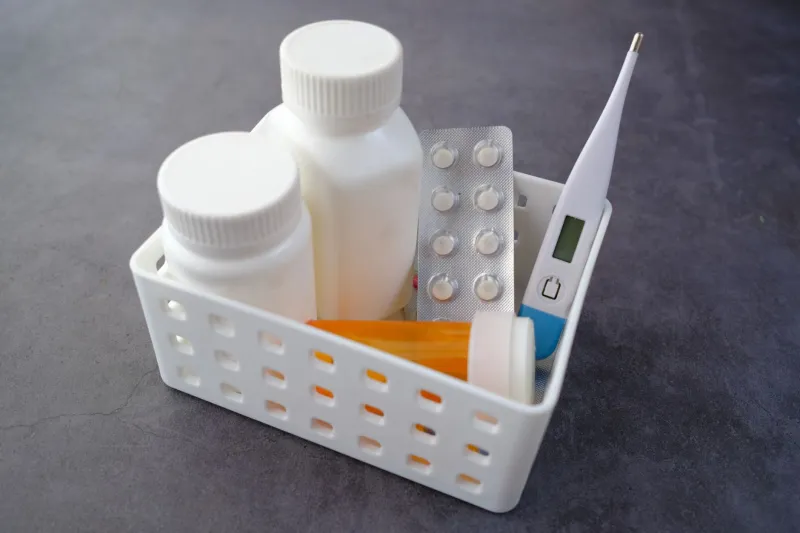
- Confirm a working thermometer, unexpired first-aid supplies, and a stocked but not overloaded kit.
- Store everything up high, locked, or out of sight if children or cognitively impaired adults live in or visit the home.
- Add a recurring calendar reminder for next January.
Why the Clean Cabinet Matters More Than It Seems
For households with grandchildren visiting on weekends, or an aging parent managing multiple prescriptions, an organized cabinet is not housekeeping—it is harm reduction. A single unattended bottle of an old opioid or a look-alike pair of blood pressure pills is all it takes to turn a routine afternoon into an emergency room visit.
Your First Option Medical provider can help with the clinical side of this audit: bring your full medication list—including supplements and OTC products—to your next appointment and ask for a medication reconciliation. It is a standard service, it takes minutes, and it catches interactions and redundancies that no cabinet inspection can.
One hour each January. A safer medicine chest for the other 8,735.